
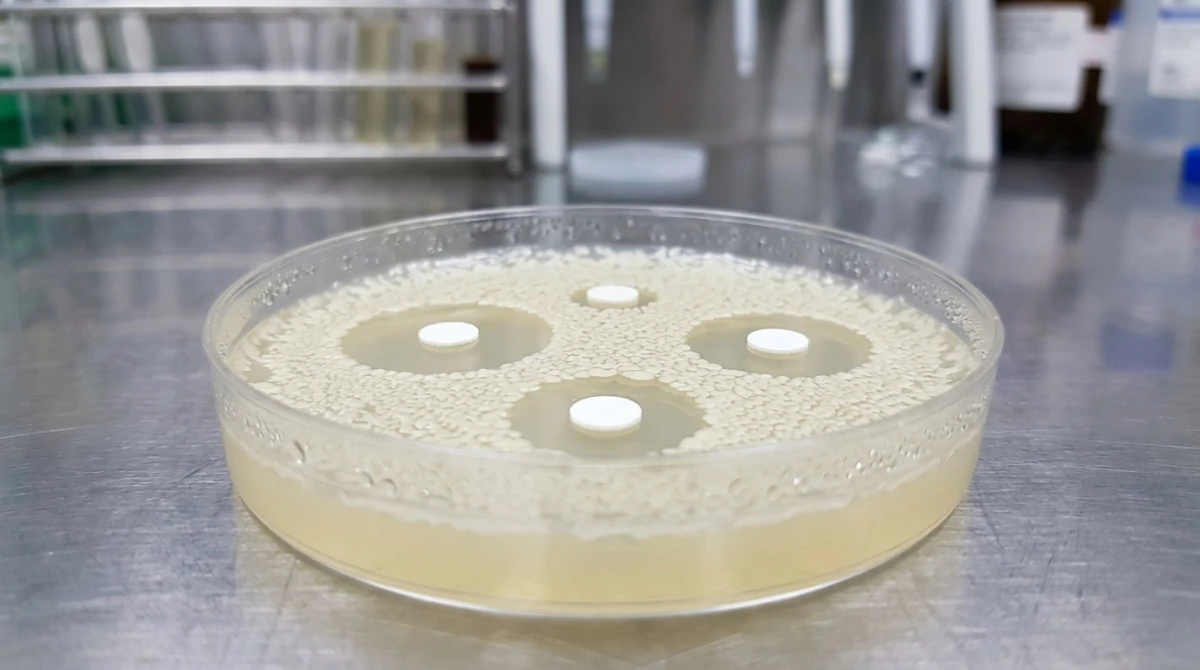
Antibiotic Resistance in Indian Hospitals: Key Data from the ICMR AMR Surveillance Network 2024 Report
India's antimicrobial resistance (AMR) burden is among the highest in the world. The Indian Council of Medical Research (ICMR) AMR Surveillance Network (AMRSN) - established in 2013 across tertiary care hospitals - publishes annual reports on resistance trends. The 2024 report analysed 99,027 culture-positive isolates (including 19,027 bloodstream isolates) collected during calendar year 2024.
The data is available directly from ICMR: ICMR AMRSN Annual Report 2024 (PDF).
Most Common Organisms in 2024
| Organism | Share of Total Isolates (2024) |
|---|---|
| Escherichia coli | 26.2% |
| Klebsiella pneumoniae | 17.5% |
| Pseudomonas aeruginosa | 11.5% |
| Acinetobacter baumannii | 10.5% |
| Staphylococcus aureus | (separately reported) |
E. coli remains the most commonly isolated gram-negative pathogen, followed by K. pneumoniae. Together, these four organisms - the ESKAPE pathogens minus Enterococcus and including Acinetobacter - account for the majority of resistant infections in Indian tertiary care.
Carbapenem Resistance: The Critical Findings
Carbapenems (Imipenem, Meropenem) are last-resort antibiotics for serious gram-negative infections. High carbapenem resistance in these organisms signals a critical treatment gap in Indian tertiary hospitals.
Acinetobacter baumannii - 91% Meropenem Resistance
In nearly 9 out of 10 A. baumannii isolates from participating Indian tertiary care hospitals, meropenem was not effective.
Acinetobacter baumannii is associated with hospital-acquired pneumonia, ventilator-associated pneumonia, and bloodstream infections in ICU settings. Its near-complete meropenem resistance is primarily driven by OXA carbapenemase genes.
Minocycline retained sensitivity in approximately 70% of isolates - making it one of the few remaining oral options for Acinetobacter infections in settings where IV options are exhausted. Colistin and Polymyxin B also retain activity but carry significant nephrotoxicity risk.
Klebsiella pneumoniae - Rising Carbapenem Non-Susceptibility
| Antibiotic | Susceptibility 2017 | Susceptibility 2024 | Non-susceptibility 2024 (derived) |
|---|---|---|---|
| Imipenem | 58.5% | 31.2% | ~69% |
| Meropenem | 48.1% | 35.1% | ~65% |
Note: Non-susceptibility percentages are derived from the susceptibility data in the report (100% minus susceptibility). "Non-susceptible" includes both intermediate and resistant categories.
The most common carbapenemase gene in K. pneumoniae in the 2024 report was OXA-48, found in 25.57% of isolates. OXA-48 is a serine carbapenemase - inhibited by Avibactam (Ceftazidime-Avibactam, Aztreonam-Avibactam) but not by tazobactam or sulbactam.
Pseudomonas aeruginosa - Carbapenem Resistance Rising Since 2017
| Antibiotic | Resistance 2017 | Resistance 2024 | Change |
|---|---|---|---|
| Imipenem | 26% | 43% | +17 percentage points |
| Meropenem | 31.3% | 38% | +6.7 percentage points |
The imipenem resistance in P. aeruginosa has increased substantially - from 26% in 2017 to 43% in 2024. Ciprofloxacin susceptibility was 57% in 2024 (meaning fluoroquinolone empiric therapy fails in roughly 4 in 10 Pseudomonas infections). Amikacin retained better activity.
Escherichia coli - Carbapenem Resistance and One Positive Trend
E. coli (the most common organism at 26.2% of isolates) showed:
- Imipenem susceptibility: 57.6% in 2024 (implying ~42% non-susceptibility)
- Meropenem susceptibility: 62.9% in 2024 (implying ~37% non-susceptibility)
One positive trend: ceftazidime susceptibility rose from 19.2% in 2023 to 27.5% in 2024. Amikacin susceptibility also rose to 72.5% - remaining one of the more reliable aminoglycosides for E. coli.
Key carbapenemase genes in E. coli: IMP at 27.97%, VIM at 19.29%, and NDM-1 (New Delhi metallo-beta-lactamase) at 14.47%. NDM-1-producing organisms are particularly challenging because NDM-1 inactivates virtually all beta-lactams and is not inhibited by Avibactam - they require Aztreonam-Avibactam (recently approved by CDSCO, March 2025) or other experimental combinations.
MRSA Trends: Rising Across the Surveillance Period
Methicillin-resistant Staphylococcus aureus (MRSA) prevalence among S. aureus isolates has increased significantly:
| Year | MRSA as % of S. aureus |
|---|---|
| 2017 | ~33% |
| 2024 | ~53% |
In 2024, 4,253 of 8,515 S. aureus isolates were MRSA. The rise from ~33% to ~53% in seven years is a significant trend. MRSA requires Vancomycin, Linezolid, or Daptomycin - all Schedule H or Schedule H1 drugs with their own access restrictions. This rise makes infection control measures in hospitals - hand hygiene, contact precautions, screening for MRSA carriage - more critical than ever.
What This Means for Clinical Practice
Empiric Therapy Decisions
With 91% meropenem resistance in Acinetobacter, empiric carbapenem therapy for suspected Acinetobacter infections (especially ventilator-associated pneumonia) is likely to be ineffective. Culture and sensitivity results are essential before finalising treatment.
For K. pneumoniae with ~65-69% carbapenem non-susceptibility, empiric carbapenems for suspected Klebsiella infections also carry substantial failure risk. Again, early cultures are critical.
The New Treatment Options
The CDSCO approval of Aztreonam + Avibactam (March 2025) adds a new option specifically for MBL + serine beta-lactamase producers (the organisms producing both NDM-1 and OXA-48, for example). This is one of very few treatments with activity against these "pandrug-resistant" organisms. However, availability and cost are currently significant barriers.
Antibiograms and Local Data
The AMRSN data represents averages across participating tertiary care hospitals. A specific hospital's resistance rates may differ. Local antibiogram data - a hospital's own periodic resistance summary from its microbiology lab - is more useful for empiric prescribing decisions than national averages.
Infection Prevention Is Not Optional
Given these resistance rates, hand hygiene compliance, contact precautions for resistant organism carriers, antibiotic stewardship programmes, and catheter/ventilator bundle care are not supplementary measures - they are the primary tool for reducing resistant infection burden, because treatment options are running out.
About the ICMR AMRSN
The ICMR AMR Surveillance Network was established in 2013 and now collects data prospectively from tertiary care hospitals across India. It is India's primary national AMR surveillance system and publishes annual reports. The network's data feeds into India's National Action Plan on AMR (NAP-AMR) and into WHO's Global Antimicrobial Resistance and Use Surveillance System (GLASS).
Source
- ICMR AMR Surveillance Network. Annual Report of the AMRSN - 2024 (Calendar Year 2024). Indian Council of Medical Research. Available at: icmr.gov.in (PDF)
All figures in this article are sourced directly from the ICMR AMRSN 2024 Annual Report. For full methodology, organism-specific tables, site-level data, and complete susceptibility breakdowns, refer to the full report. This article is for healthcare professional awareness and does not constitute clinical guidance. Prescribing decisions should be based on culture and sensitivity results and local antibiogram data.